
March 12th Weekly Word
Lesser Staffs
"Though I walk through the valley of the shadow of death,
I shall fear no evil;
for you are with me;
your rod and your staff, they comfort me."
(Psalm 23:4)
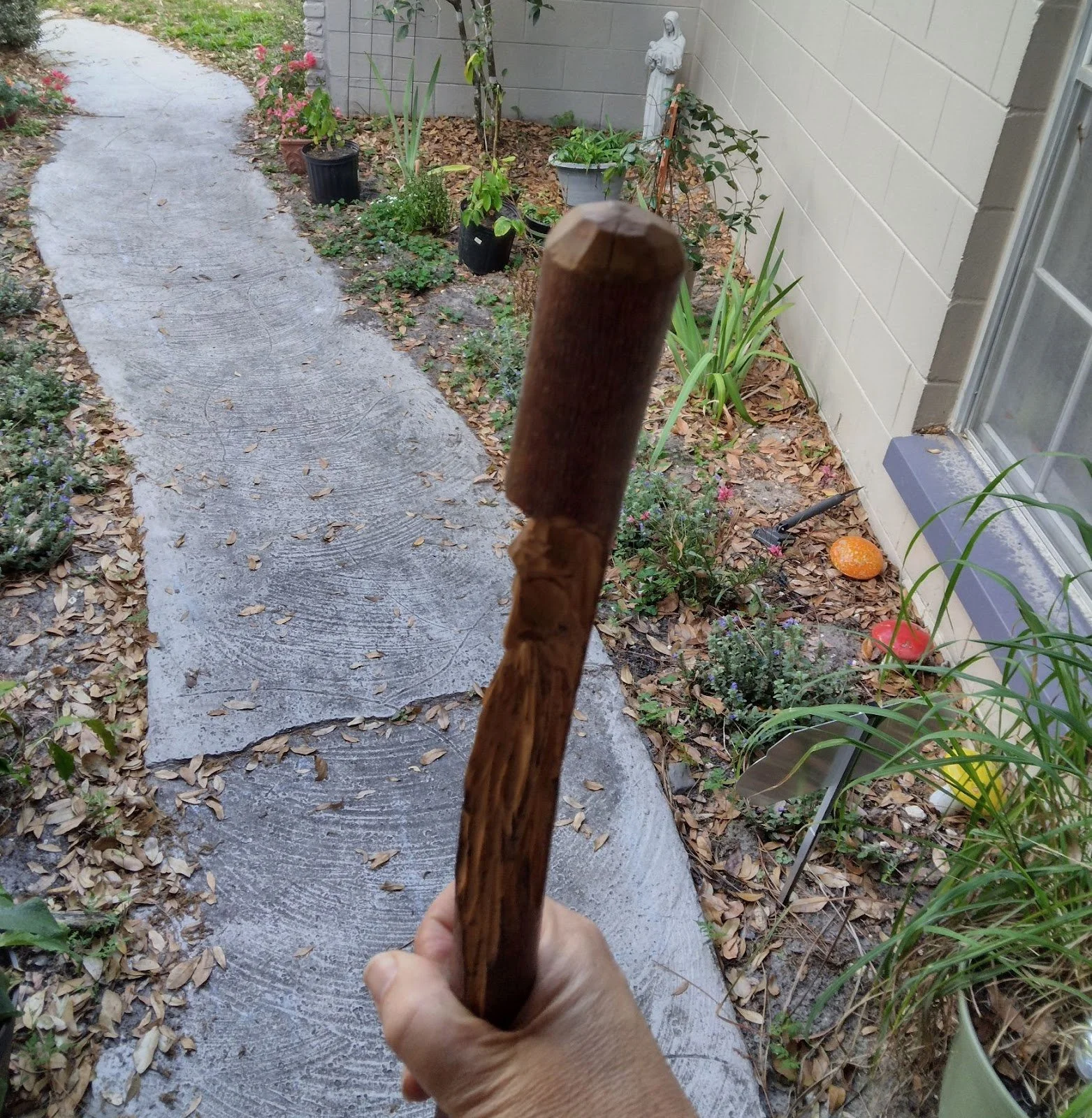
Whenever I go for a walk, I take my hiking stick (pictured above). A few months ago a neighbor asked me why I carried a stick in the neighborhood. I don't remember my response, but I think it was something deflective because I didn't want to share the real reason with a stranger.
The thing is, I feel a bit uneasy walking without my stick because of something that happened over 20 years ago.
One early summer morning in 2003, I was attacked by two Rottweilers while jogging. Nine bites later I was in the hospital getting stitched up. I healed physically, but the mental trauma hung on and to some degree still does.
So for me, the image of a staff (like in our psalm) holds weight. I get the tangible comfort that comes from having a rod put distance between me and whatever might be trying to harm me.
The truth is I'll probably always carry a stick of some sort when I run or walk. After all, I don't think it's a bad practice – but it is one largely motivated by an unhealed part of my soul.
What I suffered in this attack was triggered by physical trauma, but many of us have also endured emotional or spiritual wounds. And to defend those unhealed parts of our souls, it's not uncommon to take up another kind of staff – one that might also involve clinging to that which puts distance between us and whatever we perceive might reenact that trauma or reinjure that wound.
These staffs could amount to a variety of defense mechanisms that prevent us from entering into deeper fellowship with others and/or with God. Depending on the origin of the wound, some will steer clear of community or only enter in on a surface level, while others will use distractions to drown out Christ knocking on the door of their hearts. When things do move toward more substantive relationships, those who deal with emotional or spiritual trauma often engage in some form of relational sabotage or retreat into disconnection.
But here's the irony: through these defensive strategies, it's possible to push away the only one who can really protect us – the one Psalm 23 says is our Shepherd.
It reminds me of what Aslan says in The Chronicles of Narnia, "Oh, Adam's son, how cleverly you defend yourself against all that might do you good!"
How true it is. We often hold tight to our staffs of self-protection while ignoring the Lord's staff that is meant to bring comfort and peace. But the reality is that if the trauma is of a spiritual nature, it's often a process or a path even to get to the point where we trust God's staff as that which protects rather than punishes us.
It is a path, however, that's well worth walking.
During Lent I'd encourage you to consider getting onto that path. It might be a fearful first step, but remember that Jesus, the Good Shepherd, is walking with you. And in a figurative way I imagine that the staff he carries has been chiseled from the cross through which he demonstrated his great love for you and me. With that staff, he beats back the enemies of our hearts – sin, accusation, guilt, shame, and fear.
So, dear friend, will you join me on this journey with Jesus this Lent? And while traveling this path, I pray that we learn how to trust him and let go of our lesser staffs.
Darin+
As an additional note, I want to say that these are often deep and hard things to reckon with, and meditating on these truths can be helpful. But God also works through means like counseling, pastoral care and spiritual guidance.
If you’d like to chat personally about any of what I discussed here, feel free to reach out to me. If I'm not the right one to help in your situation, I can certainly point you in a good direction.